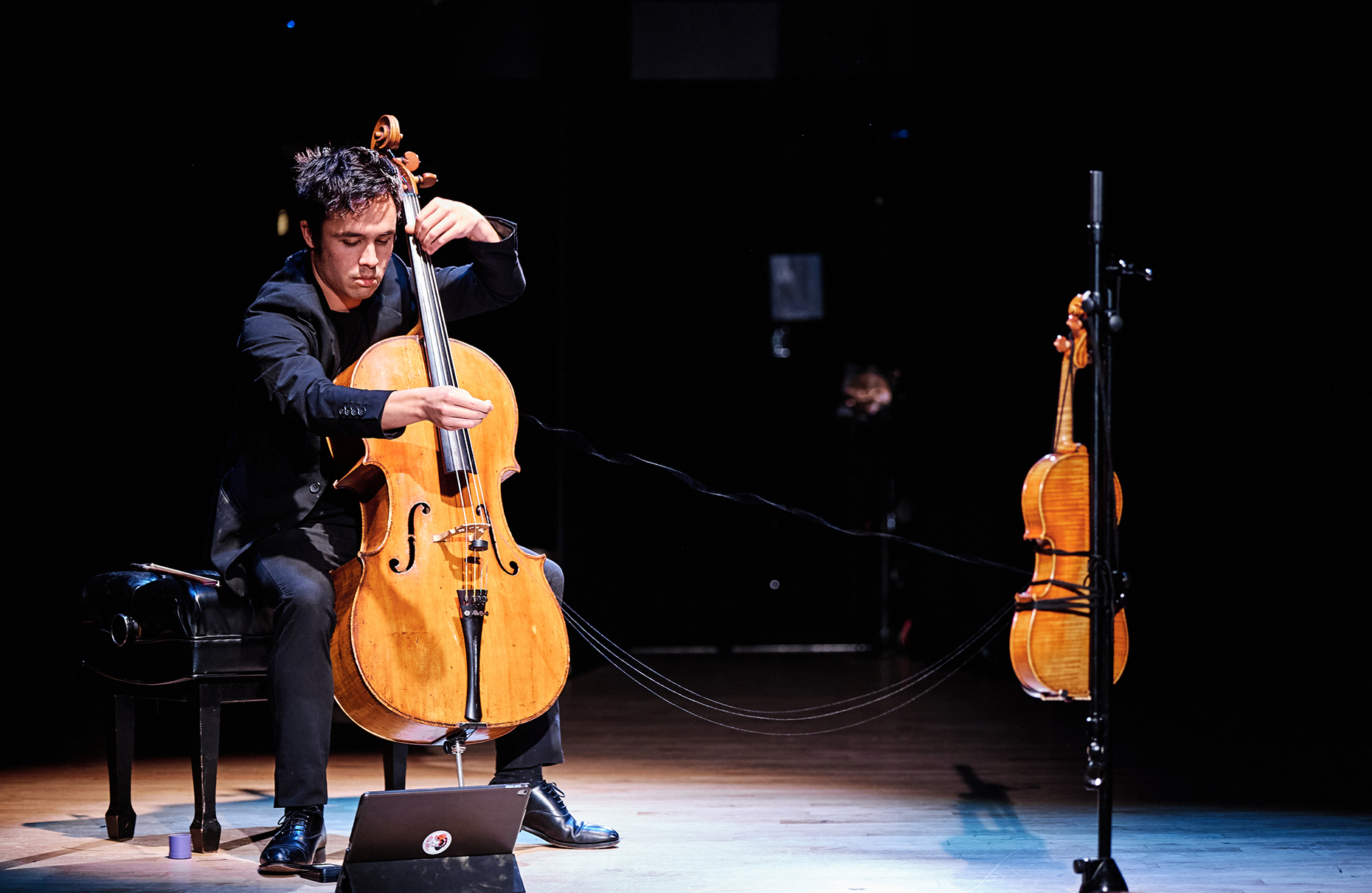
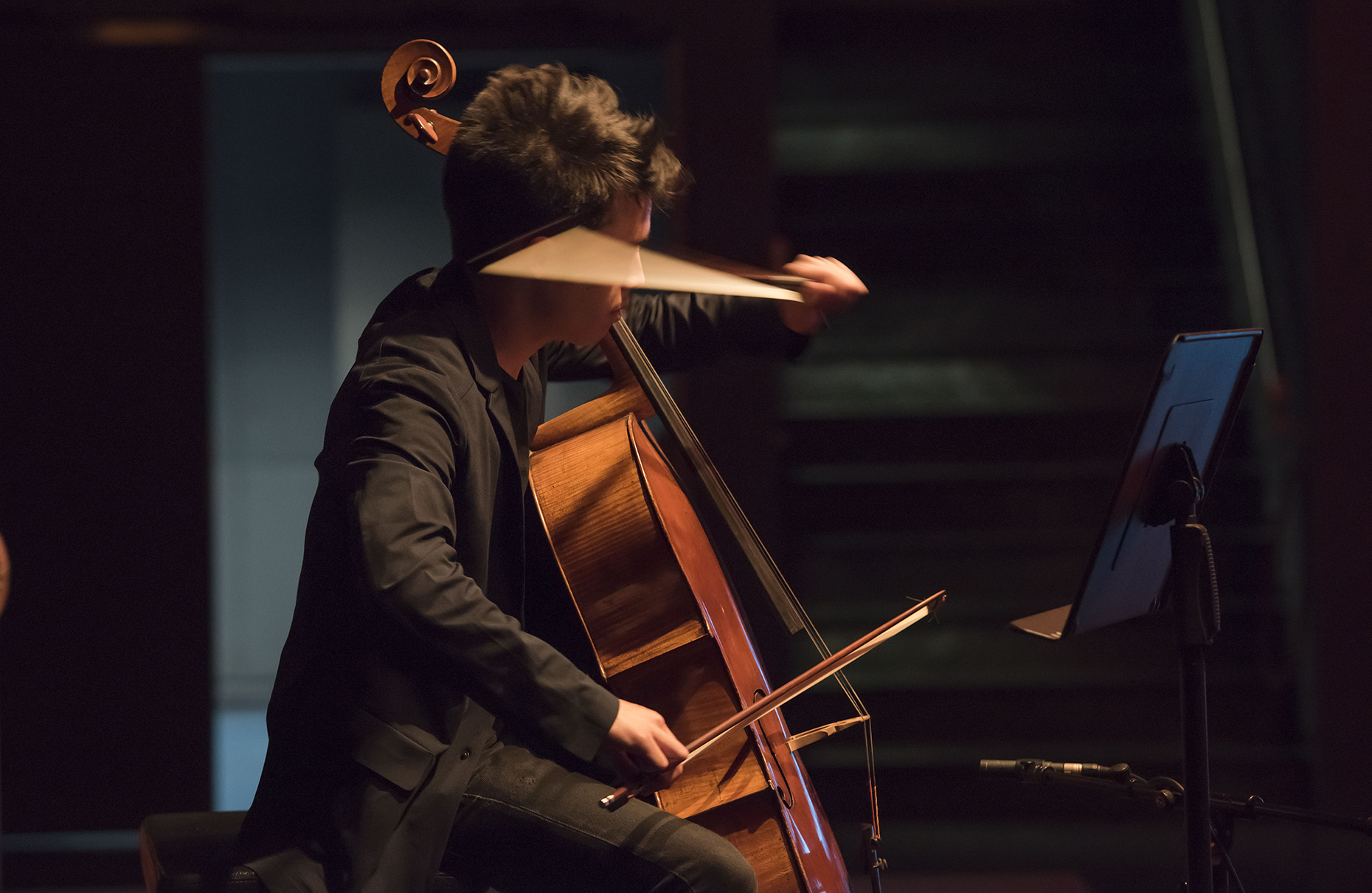
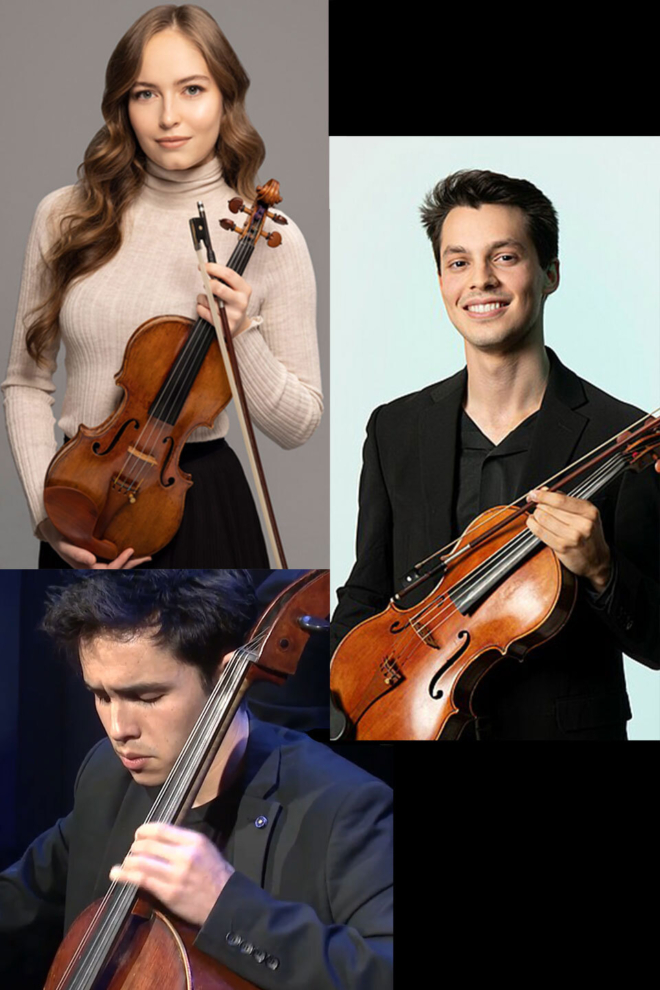
Katelyn: Why did you choose the Goldberg Variations for this program?
Jay: I like single-piece programs. I like where you sit there and you're confronted with one behemoth work.
It's iconic music, to start. But another thing I love is the quasi-algorithmic quality. There’s the aria, and then it follows a pattern of every three variations as a canon. Each canon enters with an increasing interval of one step. So the third variation is the canon at the unison, the sixth variation is the canon at the second, and so on until the 27th variation is the final canon of the ninth. The piece ends with a quodlibet [combining two melodies in counterpoint] where it should be a canon.
Before the canon, there's always a piece with a keyboard playing problem. For example, the fifth variation has this virtuosic left-hand crossing over the right, and follows this pattern iteratively to the end. It's unrelenting. Right after each canon, it's a character piece with different stylized Baroque dances.
So you can feel the arc of this piece. Rather than wandering through something unfamiliar, there's an iterative process. Combined with the almost oppressive amount of G Major, it highlights all of the ways that Bach can be inventive. This hour’s worth of variation is interesting after experiencing music like Philip Glass or Morton Feldman—stuff with a duration of sameness.
With the string trio arrangement, I like that it clarifies the individual lines. That's something I find lacking in piano recordings—it becomes this composite texture. Three different instruments can be an even more stimulating listen than when it's single-textured.
Katelyn: What are some challenges that the arrangement presents?
Jay: Bach wrote for the keyboard explicitly. There's a symphonia movement I have a hard time with that works great on piano—this extravagant French overture/fantasia. There are extra voices, and everyone has to play a lot of double stops, which makes everything clunkier.
But I also enjoy trying to figure out: where we want to sound like a keyboard or aspire to a keyboard-like quality, and where do we have more to offer than a keyboard? There are compromises all over the place and opportunities for enhancing the music with string instruments.
We see this with Bach's music all the time. Bach was a busy working musician, and there were plenty of times when he had to recycle music. An example of this is the fifth Cello Suite in C minor, which also exists in a version for lute. Because we don't have the manuscript for the cello suites, it's popular to lift some of the ornamentations and reharmonizations from the lute version. You're closer to the source, but it's the wrong instrument—he would have conceptualized things differently on the cello.
I feel I have license to make minor changes in a way that suits the music’s intention and character. Obviously it's a bit daunting to make changes to the Goldberg Variations, but there's proof all over that Bach thought that way.
Katelyn: Are you doing all the repeats?
Jay: I think so, yeah. It can feel insignificant if you just blow through it without the repeats. Repeats in older music are interesting—thinking about their function. Is it structural, so that you hear it again? Or is it an opportunity for showcasing the individuality of the performers with improvisation and embellishment? It's different for different contexts, composers, and eras. That's something I'm curious about exploring more for this concert.
When you get back to the da capo aria [the return of the opening aria at the end of the piece], it puts a ribbon on the piece: you get back home, but you're totally different. Like that T.S. Eliot thing. We start the piece with the aria accompaniment pizzicato so it sounds more like a keyboard. For the da capo, we bow the accompaniment so it's more like an organ sustain.
There's some kind of change there, whether it's psychological on the part of the listener, or if we literally do something different.
Katelyn: I hear you played this piece in Canyonlands National Park. What was that like?
Jay: Yeah. We played it in a canyon in this beautiful part of Utah right at the edge of Canyonlands [with the Moab Music Festival]. It's kind of a grotto invisible from the Colorado River, and a boat's the best way to get there. You get into this circular cut in the canyon wall formed from flash floods and erosion. They bring a nine-foot Steinway in there too. It's totally crazy.
Perfect musical acoustics. It’s the greatest hall in the world. We have this silence up there, an unusual silence that we don't experience often. Like being in a natural cathedral.
Katelyn: From where are you drawing inspiration these days, musically or otherwise?
Jay: Things in nature have been inspiring me. I love algorithmic plants. There's a great book called Algorithmic Botany that describes cactus formations with mathematical formulas of the angle between each stem.
I've been into going out into the forest and looking for different types of mushrooms. The world of fungus is mysterious, vast, and important to the entire ecosystem. It's an excuse to walk aimlessly and slow down my usual pace of having a goal and getting there as fast as possible.
I spent most of May in the Southwest—some backpacking trips through the Grand Canyon and the Grand Staircase Escalante. I find those landscapes severe and challenging. They just keep drawing me back.
And always music. I'm always trying to listen to new music.